
Emma's Nutrition logo
  • Home
  • Consultations
  • Events
  • Cookbooks
  • About Me
    • About Me
    • My Recommends
  • Recipes & Blog
  • Contact
  • Shop
logo logo
  • Home
  • Consultations
  • Events
  • Cookbooks
  • About Me
    • About Me
    • My Recommends
  • Recipes & Blog
  • Contact
  • Shop
Eye health nutrition
NUTRITION

Looking after your eyes

How our eyes reflect our overall wellbeing, and need support as they get older

Eye health often gets overlooked—until something starts to go wrong. But in truth, our eyes can reflect our overall wellbeing, and just like the rest of the body, they need support as we get older.

As we age, it’s completely normal for our eyes to undergo changes, some of which can affect vision and comfort. The good news? There’s plenty we can do to help keep our eyes healthy for longer.

Common Age-Related Eye Changes

  • Some of the most frequent eye issues that appear with age include:
  • Presbyopia – A common condition where the lens becomes less flexible, making it harder to focus on nearby objects (hence the need for reading glasses).
  • Cataracts – Clouding of the lens, often caused by years of exposure to sunlight, wind, and dust.
  • Glaucoma – A condition where increased pressure in the eye can damage the optic nerve.
  • Age-related Macular Degeneration (AMD) – Deterioration of the macula (the part of the retina responsible for central vision), leading to vision loss over time.
  • Dry Eye Syndrome – A reduction in tear quality or production, often leading to discomfort, itching, and blurred vision.
  • Retinal Changes – Natural ageing of the retina can reduce visual clarity and sensitivity. The retina may also accumulate waste products, further affecting vision.
  • Other common changes include yellowing of the lens, thinning of the conjunctiva (the membrane covering the white of the eye), and more noticeable floaters due to changes in the vitreous gel inside the eye.
A number of specific nutrients play an important role in protecting your eyes and may help reduce the risk—or slow the progression—of age-related eye conditions: 
Eye nutrition foods

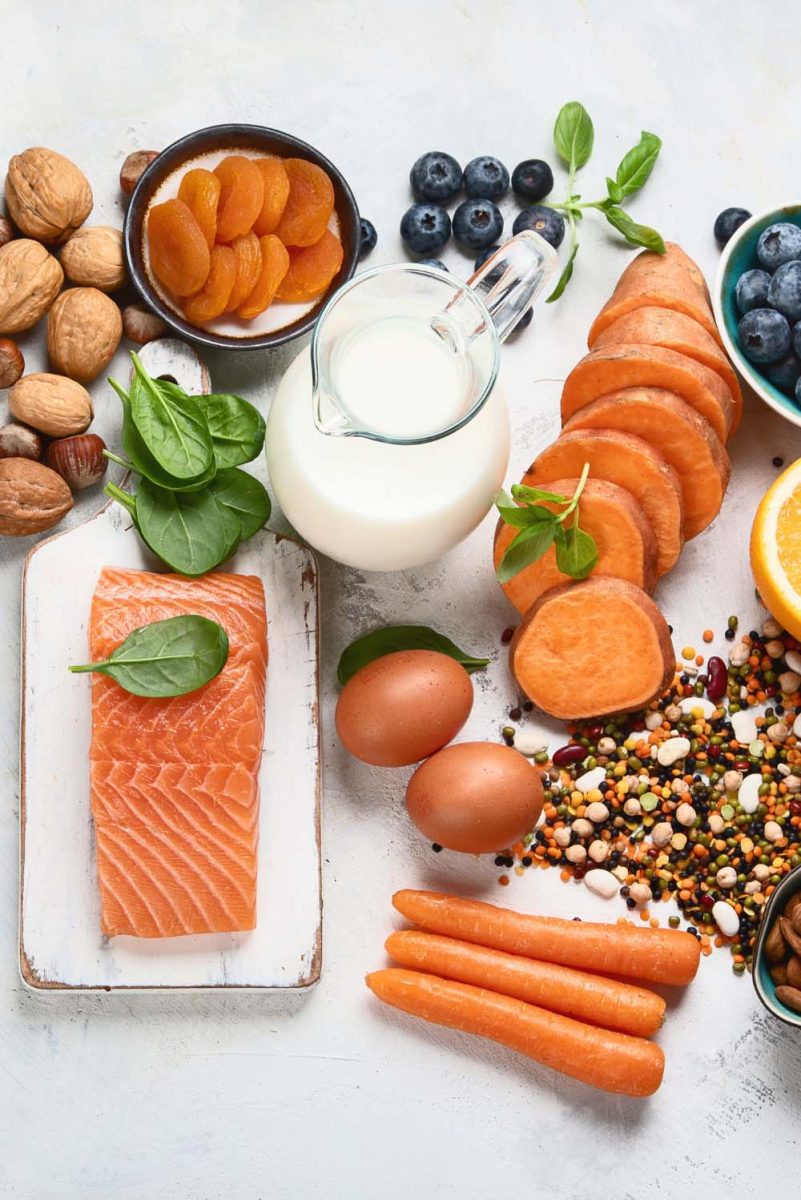
Nutrients That Help Support Eye Health

  • Vitamin A – Vital for night vision and preventing dry eyes. Found for example in liver, egg yolks, dairy products, and provitamin A carotenoids (such as beta-carotene in carrots, chard, and kale).
  • Lutein and Zeaxanthin – These protective carotenoids are concentrated in the macula and help filter harmful blue light. Good sources include leafy greens (like kale and chard), broccoli, and egg yolks.
  • Vitamin C – An antioxidant that supports the blood vessels in the eyes and helps prevent cataracts. Found for example in citrus fruits, peppers, kiwi fruit, green vegetables, and tomatoes. 
  • Vitamin E – Helps protect cells in the eye from oxidative stress and may slow the progression of AMD. Found for example in nuts and seeds.
  • Zinc – Essential for delivering vitamin A to the retina and supporting overall retinal health. Found for example in meat, shellfish (seafood generally), legumes, and seeds.
  • Omega-3 fatty acids (EPA and DHA) – Important for maintaining retinal function and helping with symptoms of dry eyes. Found for example in oily fish like salmon and sardines, as well as flaxseed, chia seeds and walnuts.

Simple Ways to Support Your Eye Health

  • Eat a diet rich in colourful vegetables, leafy greens, healthy fats, and high-quality proteins. Browse my blog for simple, nutritious recipes.
  • Wear sunglasses with UV protection when outdoors.
  • Get regular eye check-ups to spot issues early.
  • Keep on top of conditions like high blood pressure and diabetes, which can affect eye health over time.
Eye health and nutrition

Support from Our Supplements

  • Our For Eyes and Skin supplement contains beta-carotene, lutein, zeaxanthin and vitamin E—four key nutrients to support long-term eye health.
  • And don’t forget, HeraRise includes both zinc and vitamin C, meaning that between these two expertly formulated supplements, you’re giving your eyes a brilliant foundation of nutritional support.
Emma - Menopause nutritionist


For lots more tips about managing menopause and perimenopause, have a look through my other blogs and recipes here. 

From Emma x

  • logo black footer
  • Menu

    • Home
    • Consultations
    • Events & Workshops
    • Cookbooks
    • Contact Us
    • Recipes
    • About
    • Contact
    • Shop
© 2026 Emma's Nutrition. All rights reserved |

Please note if you are pregnant or breast feeding seek nutritional advice from your qualified healthcare professional before adjusting your diet or taking supplements. The information contained in this website is general advice only. It is not medical advice, nor is it designed or intended to replace medical advice. At all times the reader is advised to seek the guidance of a qualified healthcare professional before acting on any of the material contained in the website. The authors of this website and their agents are not liable for injuries or damage occasioned to any person as a result of reading or following the information contained on this website or the omission of any information contained in this website.

All intellectual property rights in the content and materials on this website are owned by Emma’s Nutrition and/or its licensors. Visitors to the website may not copy any of the materials, images and other content or otherwise use the same without the express prior written permission or licence of Emma’s Nutrition. Email enquiries/permission requests from the contact form here.

Customer Services
Cookies Policy  |   Privacy Policy  |   Refund Policy  |   Shipping Policy  |   Terms of Service